
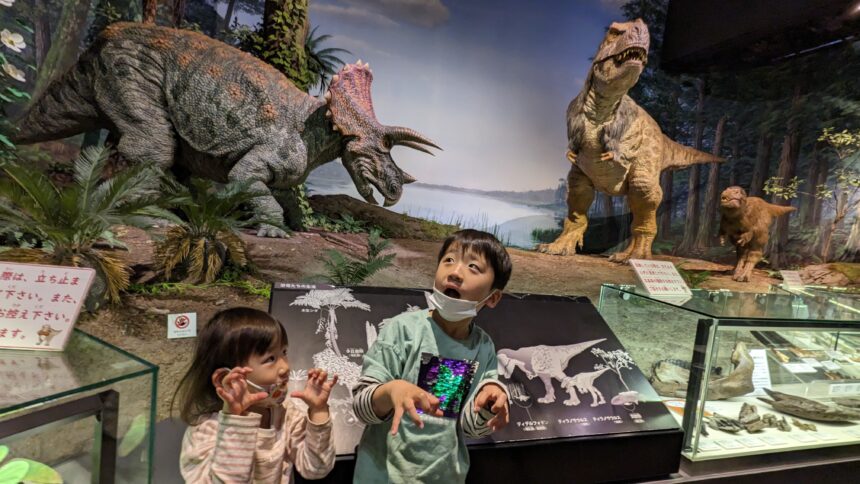
The Nature Museum is one of the largest participatory nature museums in Japan, with indoor and outdoor facilities that together cover an area equivalent to three times the size of the Tokyo Dome. One of the world’s largest mammoths greets visitors at the entrance of the museum, and dinosaur fossils can be found a short distance away. The museum is full of attractions, with ample opportunities to see amphorae of familiar creatures such as foxes and raccoons, and amphorae of rare deep-sea creatures.
The indoor exhibits can be found in five sections: Space and Meteorites, The Origin of the Earth, How Nature Works, How Life Works, and The Global Environment and Endangered Species. The most attractive feature of this nature museum is the ingenuity of the exhibits. Every exhibition room has ingenious exhibits that allow visitors to experience and participate in the museum, so even children who are still young can enjoy the museum.
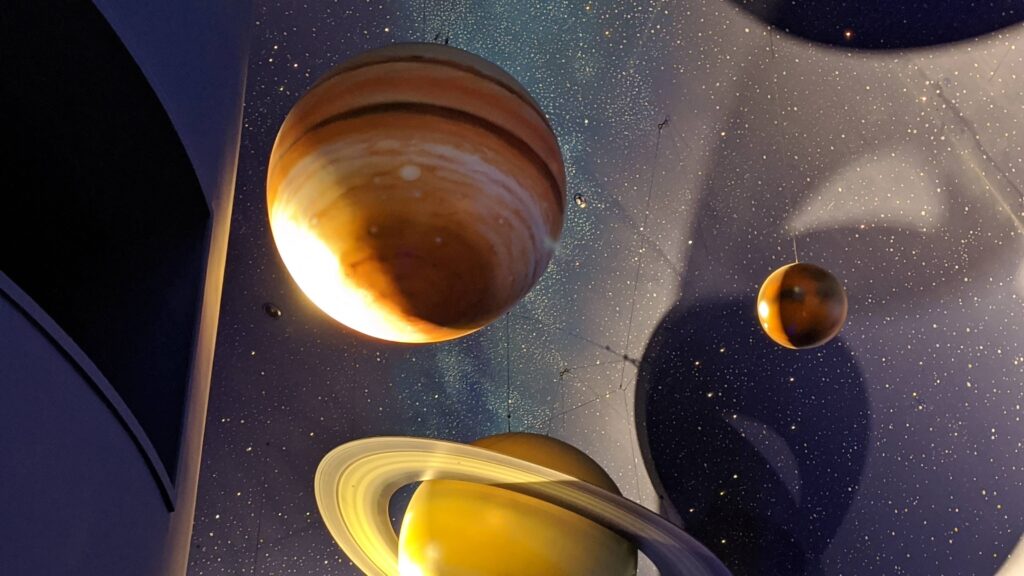
The first exhibition room is “The Evolving Universe. Visitors can learn about the solar system and various meteorites.
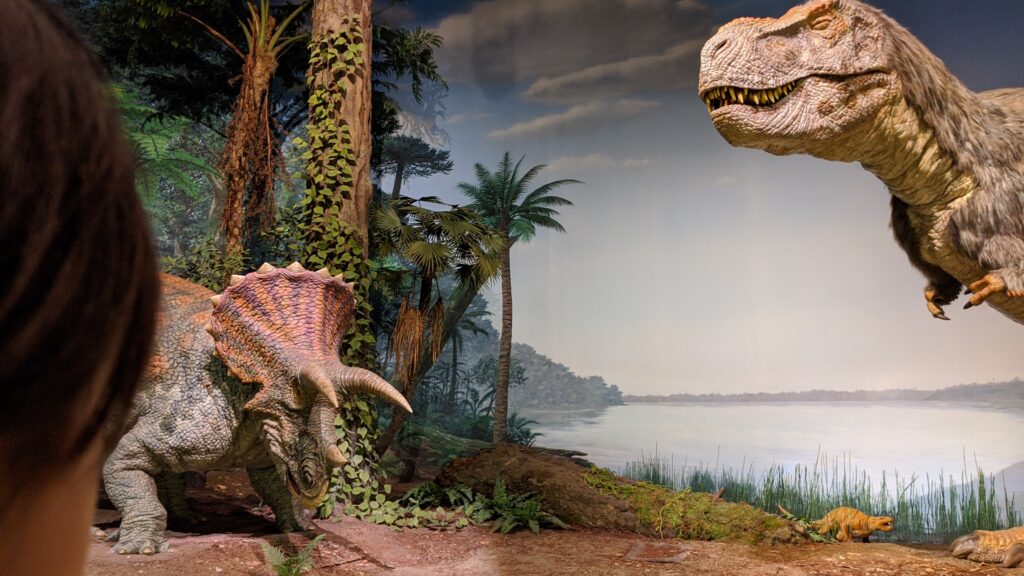
The second exhibition room is the most popular spot, “The Origin of the Earth. Visitors can learn how life evolved from the creatures of long ago, and the highlight of this section is a diorama display of a Tyrannosaurus and a Triceratops with realistic movements and noises.
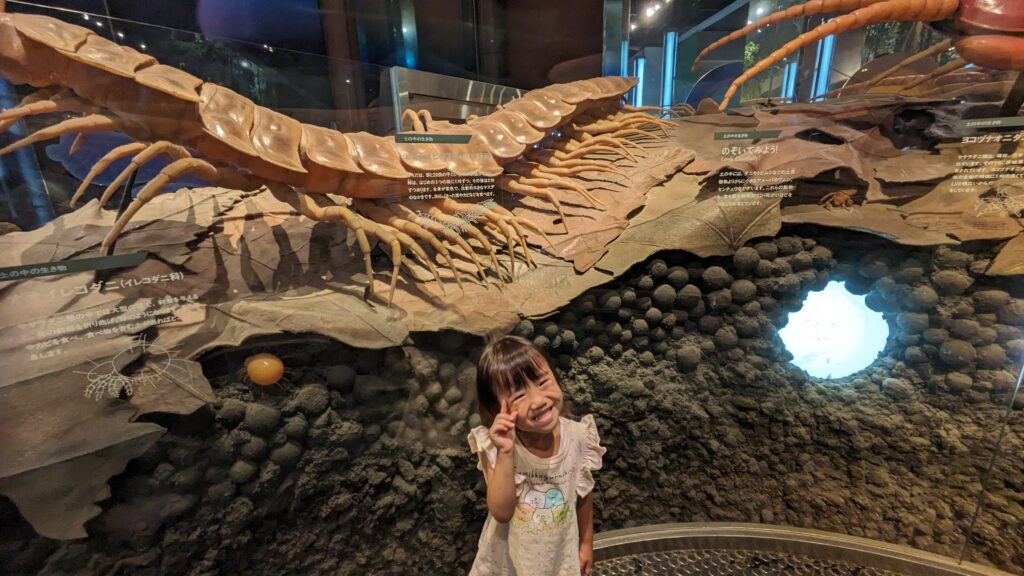
The third exhibit, “How Nature Works,” is about the ecology of fish, insects, and birds. Visitors can listen to the sounds of insects, birds, and frogs, and look through a telescope to find animals living in the forest. Visitors can also experience the sensation of becoming small by taking small creatures in the soil such as earthworms, centipedes, and ants and multiplying them by 100 to see them grow into giant insects.
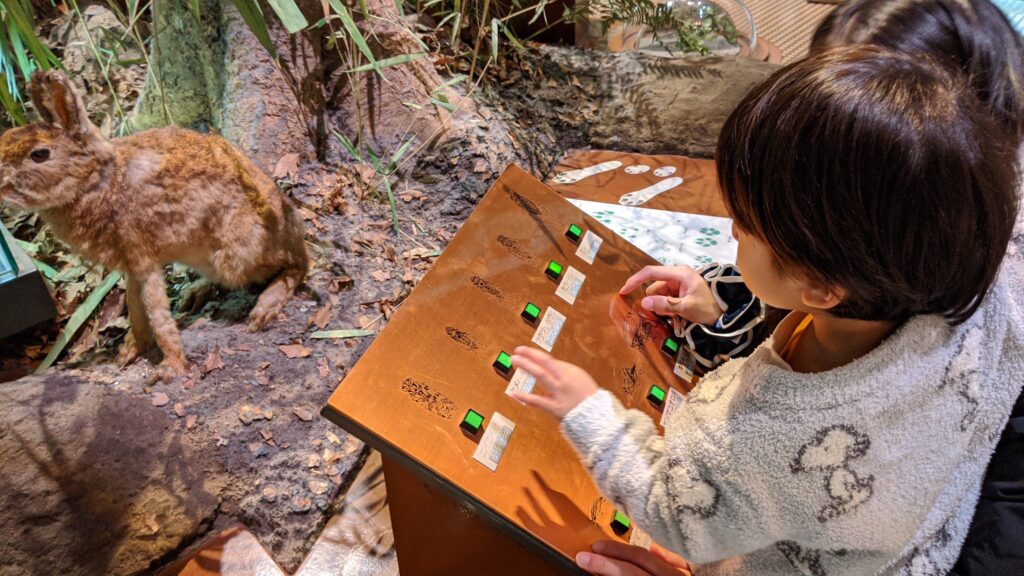
In the fourth exhibit, “How Life Works,” visitors can learn about how life forms are formed through the smells, sounds, and gazes of animals, as well as insect specimens such as rhinoceros beetles and butterflies.
In the fifth exhibition room, “Man and the Environment,” visitors can learn about endangered species and efforts to improve the environment through quizzes, and in the observation corner on the first floor, visitors can observe a variety of living creatures, including a popular deep-sea creature called the “giant gorgonian beetle.
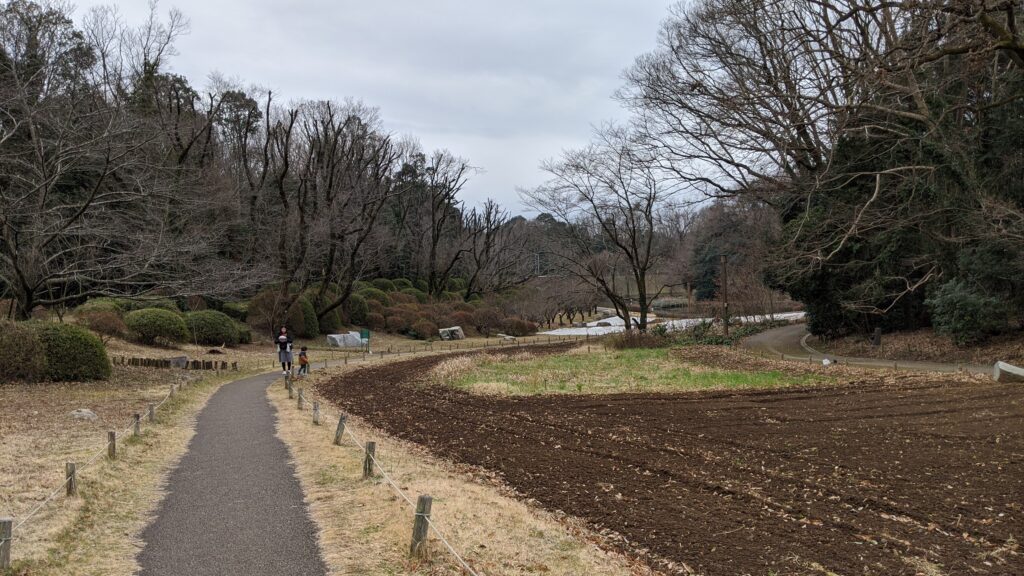
Other events such as “Sunday Science,” “Children’s Nature Class,” and “Wakuwaku Discovery,” a hands-on event for children, are abundant, and during the summer vacation free research season, they introduce hints for free research, which is also recommended for free research. The outdoor facilities feature various areas such as forests, ponds, flower gardens, and meadows, providing a wide range of space for visitors to walk around and observe trees, plants, and aquatic organisms. Visitors can observe wetland and aquatic plants in “Dragonfly Pond,” a large outdoor man-made pond, or walk along “Fureai Bridge,” a pedestrian-only bridge over Sugo Swamp, to get a close-up look at waterside birds living in the swamp. The “Dream Plaza” is a very popular place for children. Children can play on a large disc-shaped trampoline and on the spacious lawn.





No comments yet.